
Search
Search
How to Choose the Right Roll Grinding Machine for Steel Plants: Complete Buyer’s Guide
- 29-06-2026
- Admin
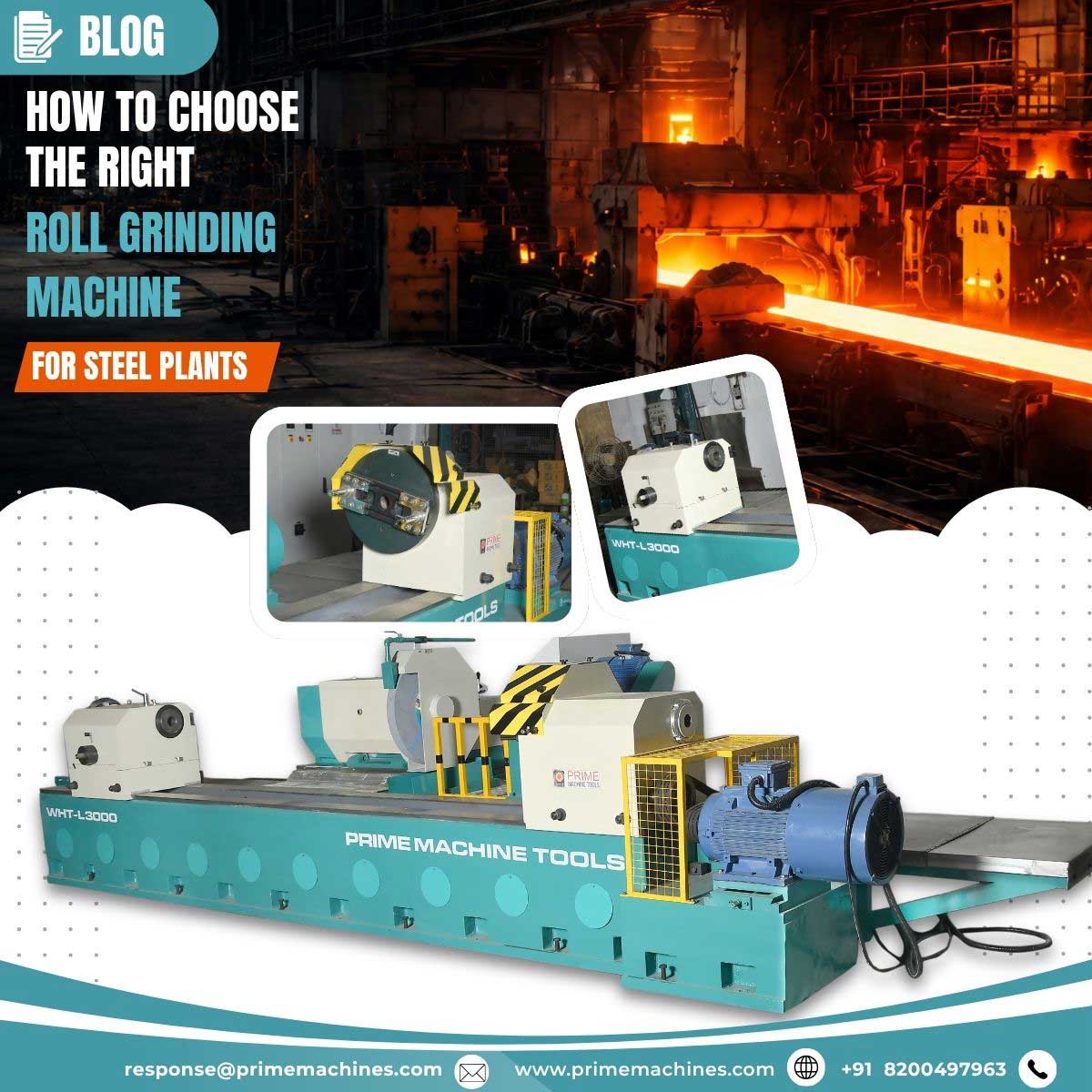
Roll grinding is a critical process in the steel manufacturing industry. The quality of grinding directly affects roll performance, surface finish, product quality, and operational efficiency. Selecting the right roll grinding machine can significantly improve productivity while reducing maintenance costs and downtime.
With numerous options available in the market, steel plant owners and maintenance managers often face challenges when evaluating different machines. This guide explains the most important factors to consider before investing in a roll grinding machine for your steel plant.
Why Roll Grinding Is Important in Steel Plants
Rolls are among the most valuable assets in hot rolling mills and cold rolling mills. During operation, rolls experience continuous wear, thermal stress, and surface damage. Regular grinding helps restore the roll profile, improve surface finish, and extend roll life.
Benefits of proper roll grinding include:
- Improved strip quality
- Better dimensional accuracy
- Extended roll service life
Higher grinding accuracy helps maintain consistent product quality and reduces material rejection rates
Choose Between Conventional and CNC Roll Grinding Machines
Conventional Roll Grinding Machines
Conventional machines are suitable for:
· Lower production volumes
· Basic grinding requirements
· Smaller steel processing facilities
Advantages:
· Lower initial investment
· Simpler operation
· Lower maintenance complexity
CNC Roll Grinding Machines
CNC machines are ideal for:
· High-volume production
· Precision grinding applications
· Automated operations
Advantages:
· Higher accuracy
· Reduced operator dependency
· Faster grinding cycles
· Repeatable results
· Increased productivity
For modern steel plants, CNC roll grinding machines often provide greater long-term value.
Assess Automation Features
Automation can significantly improve efficiency and consistency.
Important features include:
· Automatic wheel dressing
· Automatic grinding cycles
· Profile correction systems
· Automatic measuring systems
· Data recording and reporting
These capabilities help reduce operator errors and improve overall productivity.
Check Machine Construction and Rigidity
Machine rigidity directly impacts grinding quality.
A robust machine structure offers:
· Reduced vibration
· Improved accuracy
· Better surface finish
· Longer machine life
Heavy-duty machine beds and high-quality components are particularly important for steel industry applications.
Evaluate Grinding Wheel Technology
The grinding wheel plays a major role in achieving desired results.
Consider:
· Wheel material compatibility
· Wheel balancing systems
· Dressing technology
· Wheel life expectancy
The right wheel selection can improve grinding efficiency while reducing operational costs.
Prioritize Safety Features
Industrial safety should never be overlooked.
Look for:
· Emergency stop systems
· Protective guards
· Interlock mechanisms
· Automatic fault detection
· Operator safety controls
A safer working environment reduces risks and improves plant reliability.
Consider Maintenance and Service Support
Even the best machine requires periodic maintenance.
Before purchasing, evaluate:
· Availability of spare parts
· Technical support response time
· Installation assistance
· Operator training programs
· Preventive maintenance services
Reliable after-sales support minimizes downtime and protects your investment.
Calculate Total Cost of Ownership
Many buyers focus only on the purchase price.
Instead, evaluate:
· Energy consumption
· Maintenance costs
· Spare parts expenses
· Grinding wheel costs
· Productivity gains
· Machine lifespan
The machine with the lowest purchase price may not always be the most economical option over time.
Questions to Ask Before Buying a Roll Grinding Machine
Before finalizing your purchase, ask the supplier:
1. What roll sizes can the machine handle?
2. What grinding accuracy can be achieved?
3. Is CNC automation available?
4. What support services are included?
5. Are spare parts readily available?
6. Can the machine be customized for our steel plant requirements?
7. What is the expected return on investment?
Common Mistakes to Avoid
Many steel plants make costly mistakes when selecting a roll grinding machine.
Avoid:
· Choosing solely based on price
· Ignoring future capacity requirements
· Overlooking after-sales service
· Underestimating automation benefits
· Purchasing machines without performance validation
Careful evaluation helps prevent expensive operational issues later.
Conclusion
Choosing the right roll grinding machine for a steel plant requires a detailed assessment of production requirements, machine capacity, precision, automation, reliability, and service support. A well-selected machine improves roll performance, enhances product quality, and reduces overall operating costs.
By focusing on long-term productivity rather than initial purchase price alone, steel plants can maximize their investment and maintain a competitive advantage in today’s demanding manufacturing environment.
If you are planning to invest in a roll grinding machine, consulting with experienced manufacturers and evaluating machine performance against your specific requirements can help ensure the best decision for your operation.